
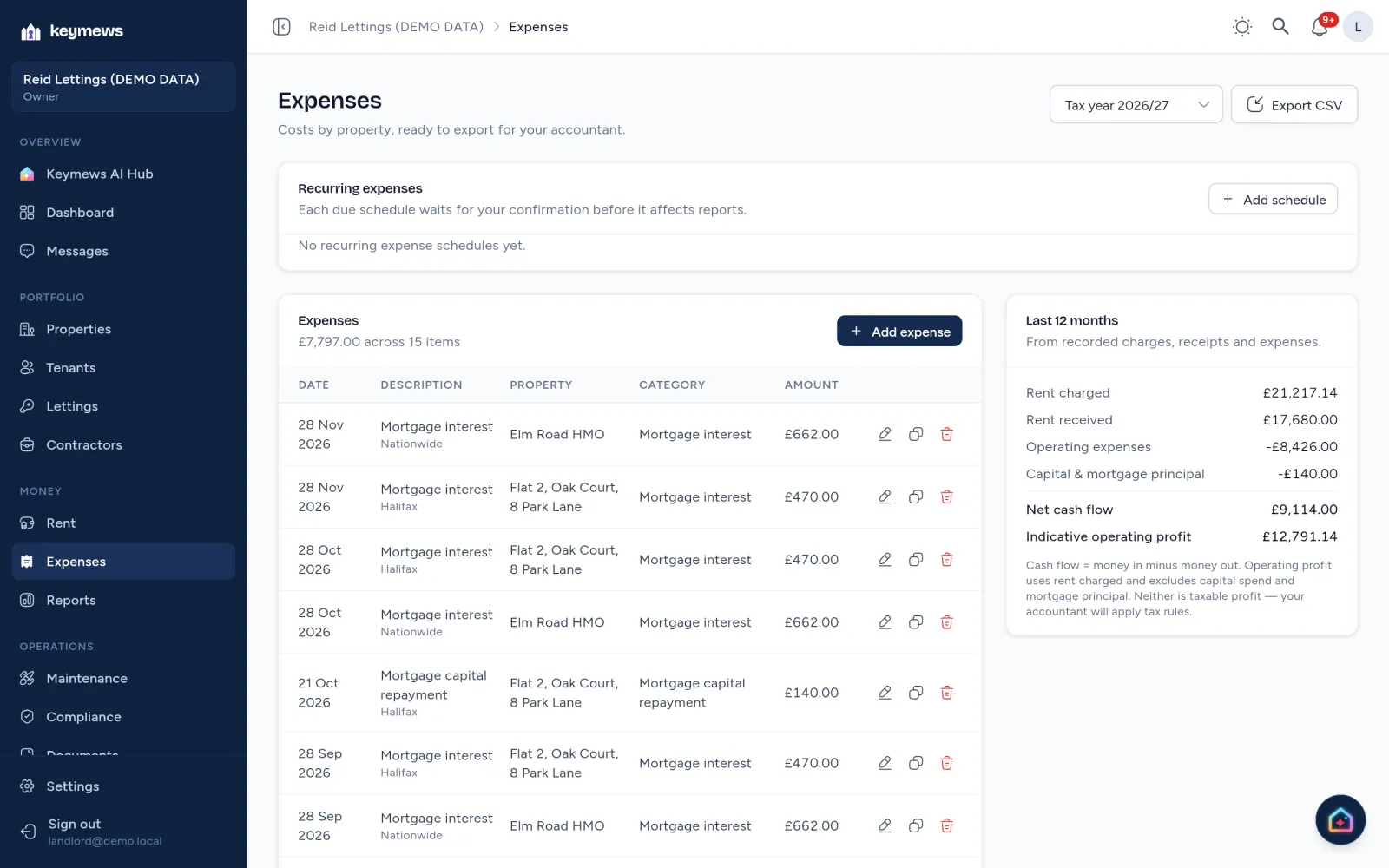
Making Tax Digital (MTD) for Income Tax changes how many landlords report their income to HMRC. Instead of one Self Assessment return a year, you keep digital records and send HMRC a summary every quarter, using software that works with MTD.
Check the dates against GOV.UK before relying on them.
When it starts
HMRC is bringing landlords in by income, starting with the largest. The thresholds are for your qualifying income, which is your total income from property and self-employment before expenses:
- From April 2026: qualifying income over £50,000.
- From April 2027: over £30,000.
- From April 2028: over £20,000.
The official timetable is on GOV.UK.
What changes day to day
- You keep a digital record of each income and expense, not a year-end summary.
- You send a quarterly update to HMRC through MTD-compatible software.
- You still finalise the year, as you would with Self Assessment.
What to get ready now
Most of the work is keeping records as you go, rather than at the end of the tax year:
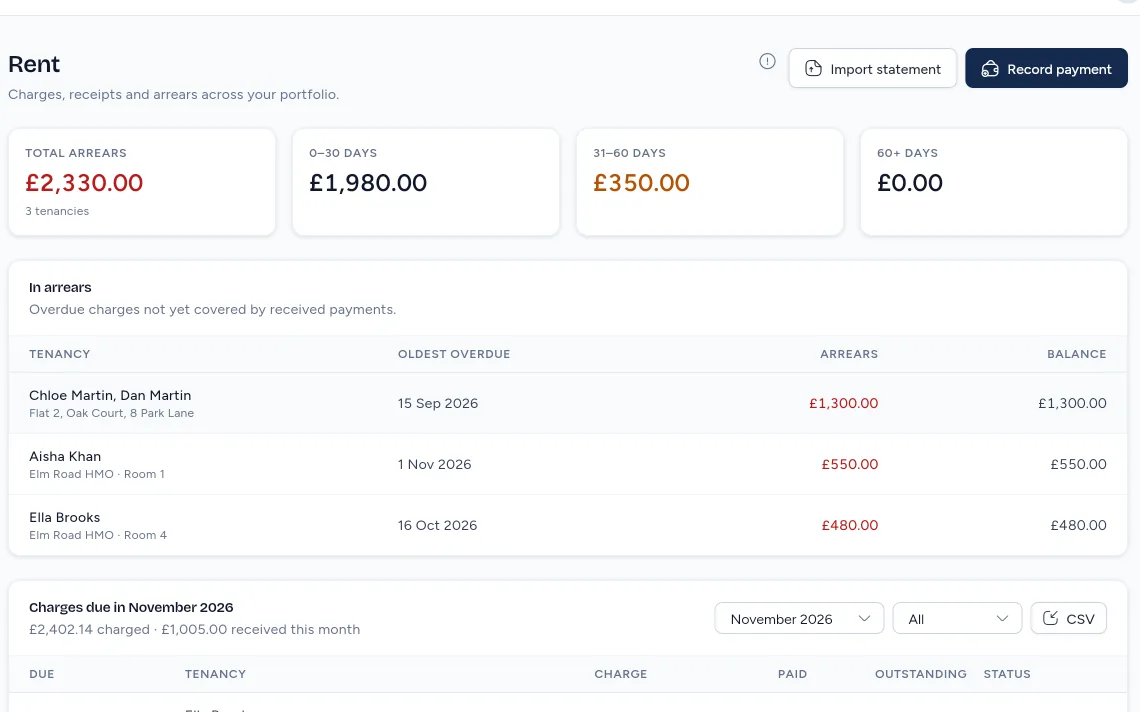
- Record rent as it arrives, with the date and the tenancy it belongs to.
- Keep receipts for repairs and running costs, filed against the property.
- Separate mortgage interest from capital repayments, because they're treated differently.
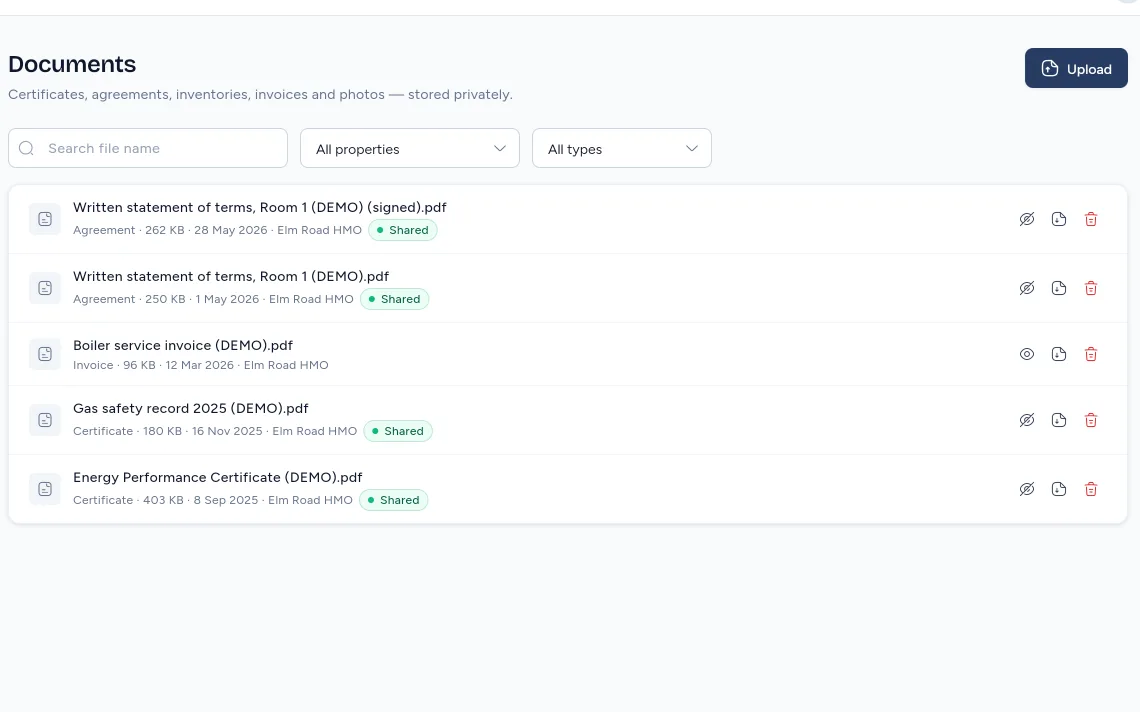
Keymews keeps rent, expenses and receipts against each property, with a tax-year view your accountant can open. It doesn't file returns with HMRC yet.
Where to check
Rules and thresholds can change. For your own situation, check GOV.UK or speak to an accountant.